Showing posts with label curry. Show all posts

Monday, March 5, 2012

Ground split pea flatbread


 Ground split pea flatbread

There are two types of roti “skins” or “flaps” in Trinidad. One is plain and the other
is stuffed with split peas. The latter is known as Dhalpurie roti, or just Dhalpurie.
Roti may be folded around a curry and eaten with the hands like a sandwich, or
served to accompany a curry, with the torn pieces of roti being used as a utensil to
scoop up the curry. Once made, roti can be frozen, then reheated in the microwave.
ingredients
2 heaped tbsp sugar
2 eggs
1/3 cups whole milk
6 cups all-purpose flour
1 tbsp salt
1/2 tsp baking powder
1/4 cup vegetable oil
1/4 cup vegetable oil or melted margarine,
or a mixture, for cooking
split pea filling
8 oz (225 g) split peas
1/2 tsp ground turmeric
2 tsp salt
3 garlic cloves, chopped
1 tbsp vegetable oil
1 tbsp ground cumin

To make the filling, put the split peas into a pan with the turmeric, half the salt, and the garlic.
cover with water, bring to a boil, and boil for 15–20 minutes or until cooked but still firm. Drain
well and allow to cool. Grind the split peas to a powdery paste in a food processor or coffee grinder. Heat the oil in a frying pan and fry the split pea paste over medium heat for 1 minute, stirring constantly to prevent
it from sticking to the pan or burning. add the cumin and remaining salt to taste. Set aside while
you make the dough. Mix the sugar and eggs with the milk in a small mixing bowl, stirring until the sugar has dissolved. Sift the flour into a large mixing bowl and stir in the salt and baking powder. Gradually add the
egg and milk mixture and knead lightly to make a soft dough. be careful not to work the dough too
much or it will become stretchy. cover with a damp cloth and leave to rest for 15 minutes. add the oil and mix lightly. Divide the dough into 12 pieces and shape each into a ball. Open each one and place 2–3 tbsp of the split pea mixture inside. Pull the sides over to enclose the filling and re-form into balls. Dredge lightly in flour, then carefully roll out the filled balls very thinly, using enough flour on the work surface to prevent sticking. Heat an oiled griddle or tawa over high heat and place a rolled-out roti on top. cook for 1 minute, then turn over and brush with oil or melted margarine. cook for 1/2 minute, then turn over again and brush with oil or margarine. remove and set aside while you cook the remaining roti in this way. Serve hot.

Pickled vegetables


rau chay chua 
Pickled vegetables
Pickled vegetables are an integral part of the Southeast Asian diet, considered
essential accompaniments to meals. Believed to aid digestion of rich, fatty or oilbased
dishes, pickled vegetables are appropriately served with curries, “cutting” the fat
while “lifting”and cleansing the palate to allow a deeper enjoyment of the food.
ingredients
1 lb (450 g) ridge cucumbers, peeled (optional)
and deseeded
1 lb (450 g) daikon radish, peeled
1 lb (450 g) carrots, peeled

Cut the cucumbers and mooli into sticks
1/4 in (5 mm) thick and 1
1/2 in (4 cm) long. Cut the carrots
into sticks of the same length but
1/8 in (3 mm) thick.
Put the vegetables in 3 separate colanders set over mixing bowls. Sprinkle each vegetable with
1 tbsp salt and toss, then leave to drain for 1 hour.
Gently squeeze any remaining juice out of the vegetables, then transfer them to a large, resealable
plastic bag. in a bowl, whisk together the sugar and rice vinegar until the sugar is completely dissolved. Add  this pickling liquid to the vegetables. Close the bag, squeezing out any air. Leave to marinate for 3 hours before serving. You can keep the pickles in the refrigerator for a week or two; the longer they are kept, the softer they will be and the more pronounced the pickle flavor.
salted lemonade
3 tbsp sea salt
1/2 cup sugar
1/2 cups white rice vinegar
Believed to aid digestion, this unsweetened lemonade (called da chanh muoi) made with salt-preserved
lemons (sometimes limes) is enjoyed at the end of a meal, either served at room temperature or chilled with
ice cubes. It is also drunk during the day as a thirst quencher and restorative, particularly in warm weather.
The ratio of lemon to water given here can be adjusted to taste. For 1 serving, rinse
1/3 preserved salt-brined
lemon and put in a bowl. Crush the lemon with a fork. Place 1–1
1/2 tbsp of the crushed lemon in a large glass.
Add ice cubes to taste, if using, and top off with 1 cup still or sparkling mineral water. Stir a few times, then
drink. While best made fresh, large quantities (full pitchers) can be prepared a few hours ahead of time and
kept in a cool place or chilled.

Noodles with pork in red curry broth


Noodles with pork in red curry broth
This curry noodle soup is a specialty of the laotian northern region of luang
Namtha and is similar to a dish of the same name from northern Thailand. It is
widely believed, however, that Kao Soi originated in Myanmar. This version
combines coconut milk with a light pork stock, creating a delicious, subtle broth.
The steaming liquid is poured over raw vegetables, and it is completed with tender
rice noodles and bits of sweet pork. If preparing the dish with laotian Kore, omit
the optional Indian curry powder in that recipe, as it is added here.
ingredients
1 lb (450 g) boned pork shoulder
2 oz (60 g) fresh ginger root
6 green onions, 4 of them crushed and
2 thinly sliced diagonally
2 tbsp fish sauce, or to taste
2 tbsp vegetable oil
5 tbsp laotian Kore (p274) or
store-bought Thai red curry paste
1 tbsp Indian curry powder
1 tsp shrimp paste
1 tbsp palm sugar
8 oz (225 g) coarsely ground pork

1 quart (liter) thick coconut milk
8 kaffir lime leaves, bruised
1 lb (450 g) fresh, thin, round rice noodles, or
8 oz (225 g) dried rice sticks, soaked in
water until pliable
5–6 oz (150–175 g) Chinese leaf, cut into
1/8-in (3-mm) julienne
1 bunch of watercress, large stalks discarded
4 oz (100 g) beansprouts
2 tbsp torn mint leaves
2 tbsp torn cilantro leaves
1 lime, quartered


Bring 3/2 quarts (1.5 liters) water to a boil and add the pork shoulder, ginger, crushed green
onions, and 2 tbsp fish sauce. Reduce the heat and simmer, partly covered, for about 1
1/2 hours or until the liquid has reduced by half. Transfer the pork to a cutting board to cool, then slice thinly
and cover with plastic wrap. Set the broth aside.
In another pan, heat the oil over moderately high heat and stir-fry the curry paste for 2 minutes or
until just golden and fragrant. Add the curry powder, shrimp paste (breaking it up), and palm
sugar, and stir-fry for about 1 minute or until fragrant. Add the ground pork and cook, stirring to
break it up, for about 7 minutes or until just golden. Reduce the heat and add the coconut milk, pork
broth, and kaffir lime leaves. Adjust seasoning with fish sauce. Cover and simmer for 30 minutes.
Bring a pot of water to a boil. If the fresh rice noodles are cold, heat in the boiling water for
5 seconds; if they are at room temperature, skip this step. If using rehydrated rice sticks, cook
them for 3 minutes. Drain. Divide the noodles among 4 large Asian-style soup bowls and top with Chinese leaf, watercress, beansprouts, and sliced pork shoulder. Bring the spicy coconut broth to a boil, then ladle into the bowls. Garnish with mint and cilantro, squeeze a lime wedge over each serving, and serve hot.

Amok chouk, Steamed snails in curry custard


Amok chouk ,Steamed snails in curry custard 
Amok is a curried coconut custard that is generally steamed in a small container
hand-formed from a section of banana leaf. a specialty of malaysia, hybrid
versions appear in both Thai and cambodian cooking. While freshwater fish such
as catfish is used in many amok recipes, this delicious and dramatic version uses
snails, and the snails and custard are cooked in the shells. Serve this as an appetizer
or light lunch or as part of a dinner with vegetables and rice on the side. be sure to
buy canned burgundian snails, which are usually sold in a package with clean shells.
The exact snail-to-custard ratio will depend on the relative size of the snail and
shell; the custard should not overflow the shell.
ingredients
1/4 cup red Kroeung (p264)
2 cups thick coconut milk (p213)
1 tbsp shrimp paste
1 tbsp fish sauce
2 tsp palm sugar or superfine sugar (optional)
1 large egg, beaten
grated zest of 1/2 lime
salt
1 stalk lemongrass, leaves separated and cut
into 24 pieces, each 4 in (10 cm) long
24–36 snail shells, well cleaned
24–36 cooked burgundian snails (about 2 cans), rinsed and drained
6 kaffir lime leaves, very finely julienned
4 red Thai chilies, seeded and very thinly  sliced into rounds
in a mixing bowl, stir and mash together the
kroeung, half of the coconut milk, the shrimp paste, fish sauce, and sugar to a smooth consistency. add the remaining coconut milk, the egg, and kaffir lime zest and mix well. Season with salt, if necessary.
Fold a piece of lemongrass leaf and set it inside a snail shell so both ends of the leaf stick out.
Half-fill the shell with the coconut mixture. Place a snail in the center and fill with more coconut
mixture. Set the snail, open end up, on a bamboo steaming rack. Repeat with the remaining lemongrass pieces, shells, coconut mixture, and snails. as you fill the steaming rack, the snails will butt up against each other and find enough support to stand. (if using a 6- or 12-portion stainless steel or ceramic snail plate, simply set the snails directly on the plate, and the plate on the bamboo steaming rack.) Half-fill a wok with water and set the covered bamboo steamer on top (the base of the steamer should not touch the water). bring to a boil over high heat, then reduce to medium-low and steam the snails for about 15 minutes or until the custard is set but still moist. Serve the snails hot, garnished with the kaffir lime leaves and chilies. To eat, simply pull out the lemongrass strands, dislodging the snail in the process.

Friday, February 10, 2012

Vegetable curry


Vegetable curry
In Indian cooking, cardamom, cloves, coriander, and cumin seeds are all
considered “warming spices” that heat the body from within, making this
an excellent winter dish.
1⁄4 cup vegetable oil
10oz (300g) red-skinned potatoes, diced
5 green cardamom pods, crushed
3 whole cloves
1 cinnamon stick, broken in half
2 tsp cumin seeds
1 onion, finely chopped
2 tsp peeled and grated fresh ginger
2 large garlic cloves, crushed
1⁄2 tsp ground turmeric
1 tsp ground coriander
                                                                     method
Heat the oil in a large frying pan over high heat. Add the potatoes and cook, stirring often, for 5
minutes, or until golden brown. Using a slotted spoon, transfer to paper towels to drain.
Reduce the heat to medium. Add the cardamom pods, cloves, cinnamon, and cumin seeds and
stir until the spices are very fragrant. Add the onion and cook, stirring often, for about 5 minutes,
or until softened. Add the ginger, garlic, turmeric, and coriander, and season with salt and pepper.
Stir for 1 minute.Stir in the tomatoes with their juices and the sugar. Return the potatoes to the pan, add the
carrots, chilies, and 1 cup of water, and bring to a boil, stirring often. Reduce the heat to low. Simmer, stirring occasionally, for 15 minutes, or until the carrots are just tender, adding a little water if needed. Stir in the cabbage, cauliflower, and peas. Return the heat to medium and simmer for about
10 minutes, or until the vegetables are tender. Stir in the cilantro and season again. Remove and
discard the cardamom pods and cloves. Transfer to a serving bowl, sprinkle with almonds, and
serve hot.Good wIth Lots of basmati rice or naan bread. Prepare ahead . The curry can be made 1 day ahead, covered and refrigerated. Reheat over low heat, adding water if the sauce is too thick. salt and freshly ground black pepper
one 14.5oz (411g) can chopped tomatoes
pinch of sugar
2 carrots, diced
2 fresh hot green chilies,
seeded (optional) and sliced into thin rounds
1 cup sliced Savoy or green cabbage
1 cup cauliflower florets
1 cup thawed frozen peas
2 tbsp chopped cilantro
toasted sliced almonds, to garnish

Sunday, February 5, 2012

Banh mi ,Saigon baguette


Banh mi ,Saigon baguette
Originating from the French colonial era of the mid-1800s to mid-1900s, Banh Mi
is made from a mixture of rice and wheat flours. Shorter (about half the length)
and lighter than their French cousins, and sometimes almond-shaped rather than
long and slender, these breads have become an integral part of the everyday vietnamese and Cambodian diet. in lieu of the more traditional rice or noodles,
baguette is often eaten with coconut curries, where it is used as a scoop. Smeared
with butter, it is also enjoyed for breakfast; when sliced lengthwise and filled with
pork, vegetables, and chili paste it is a popular lunchtime sandwich.
ingredients
1/2 oz (15 g) fresh yeast
1/2 cups lukewarm water
1 cup rice flour
method
Put the yeast in a small bowl and add the lukewarm water. Stir until dissolved.
Sift the flours and salt into a large mixing bowl. Make a well in the center and add the yeast liquid.
With a wooden spoon, incorporate the wet and dry ingredients until fully combined. the dough
should be soft, not wet, and definitely not stiff.
Turn the soft dough onto a floured work surface and knead for about 5 minutes or until smooth
and elastic. Shape into a ball. Grease a large mixing bowl and place the dough ball in it. Cover with
plastic wrap and leave to rise at warm room temperature for 3 hours or until doubled in size.
Punch down the dough, bringing the sides toward the center. turn the dough out onto a floured
work surface and knead for 2 minutes, then shape into a ball once again. Divide the dough into
4 equal pieces. Make sure they are separated by 2 in (5 cm) or so, then cover them with plastic
wrap and leave to rise at warm room temperature for 2 hours or until doubled in size.
Punch down each piece of dough, rolling and pulling it (against the work surface) back into a ball.
Stretch each ball roughly into a
1/2-in- (1-cm-) thick rectangle, then roll into a slender, almondshaped
loaf with tapered ends. Coverthe dough with oiled plastic wrap and leave to rise at warm room temperature
for 1 hour or until almost doubled in size. 2/4 cups white bread flour, plus extra for kneading
2 tsp salt Remove all but one rack from your oven. Place the rack at the bottom and set a pizza stone on it.
Preheat the oven to 450°F (230°C). Sprinkle a peel or baking tray with flour and place 1 or 2 shaped breads on it. Score each bread 3 times on the diagonal using a clean razor blade or sharp knife. Slide the breads onto the hot stone and bake for 20–25 minutes or until golden. transfer the loaves to a wire rack and leave to cool for 1–2 hours before eating.

Cari chay vegetable and tofu curry


Cari chay vegetable and tofu curry
tofu, which originated in China millennia ago, came into vietnamese cuisine during
China’s thousand-year rule of vietnam, from approximately 100 bce to 1000 ce.
today, with the high cost of meat (usually reserved for special occasions and
holidays) and the religious preferences of vegetarian Buddhism, tofu still plays an
important role in the country’s cooking. Cari Chay combines tofu, bamboo, and
Asian eggplant in a relatively light dish suitable for any season. it is subtle with
a light coconut milk broth spiced with curry powder. the last-minute addition of
vietnamese cilantro lends a floral finish. Serve with rice or baguette .
ingredients
3 tbsp vegetable oil
2 large garlic cloves, crushed
1 large shallot, thinly sliced
1–1/2 tbsp vietnamese Cari or
store-bought indian curry powder
1 tbsp palm sugar
1 quart (liter) thick coconut milk
juice of 1 lime
2 tbsp fish sauce (optional)
2 tsp annatto seed extract (optional)
method
Heat the oil in a pan over high heat and stir-fry the garlic and shallot for about 5 minutes or until
they are golden. Add the curry powder and palm sugar and continue to stir-fry for 1 minute or
until fragrant. Add the coconut milk, lime juice, fish sauce, annatto seed extract, lemongrass, and
kaffir lime leaves. Bring to a boil, then reduce the heat to low. Adjust the seasoning with salt and
add the tofu, bamboo shoot, and Asian eggplants. Simmer, covered, for 10–15 minutes or until the
eggplants are tender. Serve garnished with vietnamese cilantro or thai basil.
2 stalks lemongrass, outer leaves discarded,
then bruised 2 kaffir lime leaves, bruised
salt
2 lb (900 g) firm tofu, cut into 1-in (2.5-cm)  cubes
1 large boiled bamboo shoot, thinly sliced
2 Asian eggplants, halved lengthwise and
cut into 1-in (2.5-cm) pieces
24 vietnamese cilantro leaves or thai basil leaves

Cari ga Chicken curry with sweet potatoes and carrots


Cari ga Chicken curry with 
sweet potatoes and carrots 
vietnamese curries are a specialty of the south of the country, where the indian
culinary influences are pronounced. While herbal pastes are generally employed in
Cambodian or Laotian curies, they are absent from vietnamese versions, and fresh herbs such as lemongrass and kaffir lime leaves are used whole as flavor enhancements. Another difference is that for a chicken curry such as this one, the vietnamese cook will marinate the chicken in a sweetened curry powder before
cooking. Potatoes are an integral part of vietnamese curries, with the preferred type being sweet white yams. Serve this with rice or baguette.
ingredients
1 chicken, about 2
1/2 lb (1 kg)
2 tbsp vietnamese Cari (p282) or
store-bought indian curry powder
1 tsp sugar
1 tsp salt
1/4 cup vegetable oil
2–3 white yams or sweet potatoes, peeled
and cut into 1-in (2.5-cm) cubes
3 large garlic cloves, crushed
2 shallots, cut into wedges
1 quart (liter) thick coconut milk (p213)
2 tsp annatto seed extract (optional)
2 stalks lemongrass, outer leaves removed,
then bruised
2 kaffir lime leaves
2 tbsp fish sauce
3 large carrots, peeled and cut into
1/2–2-in- (4–5-cm-) long pieces
salt
method
Remove the legs from the chicken and split them at the joint into thighs and drumsticks. Remove
the wings and discard the tips. Split the chicken in half down the breastbone. Cut out the back and
discard (or reserve for making stock). Cut each breast crosswise into 2 equal pieces. You should
have 10 pieces in total.
Mix together 1 tbsp of the curry powder, the sugar, and the salt in a large bowl. Add the chicken
and toss well to coat. Marinate for 1 hour.
Heat the oil in a large pan over medium-high heat and brown the yams all over for about
5 minutes. (the yams should be browned only, not cooked through.) With a slotted spoon, transfer
the yams to paper towels to drain.
Add the chicken, skin side down, to the pan and cook for about 10 minutes, turning to brown all
sides. With a slotted spoon, transfer the chicken to paper towels to drain.
Add the garlic and shallots to the pan and stir-fry for about 5 minutes or until lightly golden. Add
the remaining curry powder, the coconut milk, annatto seed extract, lemongrass, kaffir lime leaves,
fish sauce, and carrots, then return the chicken and yams to the pan. Bring to a boil. Reduce the
heat to a gentle boil, cover, and cook for 20 minutes or until the chicken and yams are tender.

Kao soi Noodles with pork in red curry broth


Kao soi Noodles with pork in red curry broth
This curry noodle soup is a specialty of the laotian northern region of luang
Namtha and is similar to a dish of the same name from northern Thailand. It is
widely believed, however, that Kao Soi originated in Myanmar. This version
combines coconut milk with a light pork stock, creating a delicious, subtle broth.
The steaming liquid is poured over raw vegetables, and it is completed with tender
rice noodles and bits of sweet pork. If preparing the dish with laotian Kore, omit
the optional Indian curry powder in that recipe, as it is added here.
ingredients
1 lb (450 g) boned pork shoulder
2 oz (60 g) fresh ginger root
6 green onions, 4 of them crushed and
2 thinly sliced diagonally
2 tbsp fish sauce, or to taste
2 tbsp vegetable oil
5 tbsp laotian Kore (p274) or
store-bought Thai red curry paste
1 tbsp Indian curry powder
1 tsp shrimp paste
1 tbsp palm sugar
8 oz (225 g) coarsely ground pork
method
Bring 1/2 quarts (1.5 liters) water to a boil and add the pork shoulder, ginger, crushed green
onions, and 2 tbsp fish sauce. Reduce the heat and simmer, partly covered, for about 1
1/2 hours or until the liquid has reduced by half. Transfer the pork to a cutting board to cool, then slice thinly
and cover with plastic wrap. Set the broth aside.
In another pan, heat the oil over moderately high heat and stir-fry the curry paste for 2 minutes or
until just golden and fragrant. Add the curry powder, shrimp paste (breaking it up), and palm
sugar, and stir-fry for about 1 minute or until fragrant. Add the ground pork and cook, stirring to
break it up, for about 7 minutes or until just golden. Reduce the heat and add the coconut milk, pork
broth, and kaffir lime leaves. Adjust seasoning with fish sauce. Cover and simmer for 30 minutes.
Bring a pot of water to a boil. If the fresh rice noodles are cold, heat in the boiling water for
5 seconds; if they are at room temperature, skip this step. If using rehydrated rice sticks, cook
them for 3 minutes. Drain.
Divide the noodles among 4 large Asian-style soup bowls and top with Chinese leaf, watercress,
beansprouts, and sliced pork shoulder. Bring the spicy coconut broth to a boil, then ladle into the
bowls. Garnish with mint and cilantro, squeeze a lime wedge over each serving, and serve hot.
1 quart (liter) thick coconut milk (p213)
8 kaffir lime leaves, bruised
1 lb (450 g) fresh, thin, round rice noodles, or
8 oz (225 g) dried rice sticks, soaked in water until pliable
5–6 oz (150–175 g) Chinese leaf, cut into1/8-in (3-mm) julienne
1 bunch of watercress, large stalks discarded
4 oz (100 g) beansprouts
2 tbsp torn mint leaves
2 tbsp torn cilantro leaves
1 lime, quartered

Kore pou gali Stir-fried yellow curried crabs


Kore pou gali Stir-fried yellow curried crabs
This seafood curry is a stir-fry rather than the more usual stewed dish. The fierce
cooking heat elevates the aromas of the herbs and spices, caramelizing their
natural sugars and intensifying the overall flavor of the dish. Kore Pou Gali is
prepared using small, rice-paddy-raised freshwater crabs, but any small crabs will
do as long as they are halved or quartered to allow the curry flavors to mingle with
the natural juices of the crabmeat. The dish is a perfect appetizer or light lunch
served with steamed sticky rice and pickled vegetables (p283). As with many
laotian foods, this can be served at room temperature and eaten with the hands.
Some lao cooks make this curried crab using only Indian curry powder; others use
a fresh curry paste such as the one called for here; and still others combine the
two. These approaches betray the cultural underpinnings of laotian food. Equally
delicious stir-fries can be made using cut-up lobster, clams, or mussels.
ingredients
1/4 cup vegetable oil
5 tbsp laotian Kore (opposite) or store-bought
Thai curry paste
1 tsp Indian curry powder (optional)
8 small crabs, about 8 oz (225 g) each,
halved or quartered
2 green onions, thinly sliced diagonally
method
Heat the oil in a wok over high heat and stir-fry the curry paste for about 5 minutes or until golden
and fragrant. Add the curry powder, if using, and stir-fry to blend well.
Reduce the heat to moderate and add the pieces of crab, tossing them to coat each piece with the
curry paste. Cover the wok and cook for 5 minutes. Toss the crabs again and cook, covered, for a
further 5 minutes.
Transfer the crabs to a serving platter and garnish with the green onions.

Kroeung , cambodian herbal paste


Kroeung , cambodian herbal paste
This is an all-purpose cambodian herbal paste. Similar in many ways to indian and,
especially, Thai curry pastes, it belies the idea that cambodia does not have curry
pastes, or curries in general for that matter. Kroeungs come in several versions that
include yellow (using additional turmeric), green (using green lemongrass leaves)
and red (using red chilies), just like Thai curry pastes. it is essentially (or arguably)
the foundation to many cambodian hybrid curries, and contains seven main
ingredients: lemongrass, galangal, wild ginger (krachai), garlic, shallot, kaffir lime
zest, and turmeric. other more complex
kroeungs may also include kaffir lime
leaves, cilantro root, and chilies. For a basic curry base, stir-fry the paste with 1 tbsp indian curry powder and 1 tbsp or more shrimp paste, until it becomes two shades darker. Add thick coconut milk and/or stock and proceed as you would withother types of curries, adding meat, poultry, or seafood, and vegetables.
ingredients
1 stalk lemongrass, outer leaves removed,
then chopped
1 oz (30 g) galangal, chopped
1 oz (30 g) wild ginger
2 large garlic cloves, crushed
1 large shallot, chopped
grated zest of 1 kaffir lime
4 kaffir lime leaves (optional)
3 tbsp finely chopped cilantro root (optional)
1 oz (30 g) turmeric root, chopped, or
1/2 tsp ground turmeric
Traditionally, this paste is made using a mortar and pestle, pounding the most fibrous ingredients
first, as they will need more pulverizing than anything that is tender. However, it is easier, and quicker, to use a food processor or blender: blend the ingredients, adding water (1 tbsp at a time as necessary) to ease the process. The amount of water, if needed, all depends on how naturally juicy the ingredients are.
The paste is always best freshly made, but can be kept in an airtight container in the refrigerator for 2–3 days.
other ingredients
2 lemongrass leaves (if making a green
kroeung), chopped
extra
1/2 oz (15 g) turmeric root or
1/4 tsp
ground turmeric (if making a yellow kroeung)
2–4 dried large red chilies (if making a red
kroeung), soaked until soft, seeded,
and chopped

Preparing dried chilies


Preparing dried chilies 
in general, large, smooth chilies are much less hot
than small, wrinkly chilies. Both are used dried and
fresh. When dried, chilies are normally rehydrated
before adding to a recipe. They may be seeded, too,
to make them less hot. When preparing chilies, you
may want to wear plastic or rubber gloves, as there
is an alkaloid in chilies, called capsaicin, that can
irritate your skin. After preparing chilies, thoroughly
wash your hands with soapy water .
Put the chilies in a bowl of lukewarm water and place a small plate on top to keep them submerged. Leave to soak until soft and fully rehydrated (this can take as long as 15–30 minutes, depending on the size of the chilies).
Drain the chilies and pat dry with paper towels. Tear the chilies open and remove the stalks, veins, and seeds. (It is the seeds and veins in a chili that contain the heat.) Chop the chilies, then grind in a mortar for a curry paste or use according to the recipe instructions.
Ground roasted chilies
Roast dried chilies (mildly hot red chilies or very hot bird’s-eye or bird
chilies) in a wok or pan over moderate heat, stirring regularly to
prevent scorching, until they change color and smell toasted. Allow to
cool, then grind to a coarse or fine powder with a mortar and pestle,
a clean coffee grinder, or a spice mill. The powder will keep well in an
airtight container in a dark, cool place for up to 1 year.

Saturday, January 28, 2012

Pitod ka saag Chickpea flour dumplings in yogurt sauce


Pitod ka saag Chickpea flour dumplings 
in yogurt sauce
this is a very unusual vegetarian dish using yogurt and chickpea flour as the
primary ingredients. the texture of the dumplings and the complex mix of spices
make a very interesting dish. this is good in the summer, served with steamed rice.
ingredients
1 lb 10 oz (750 g) plain Greek-style yogurt
1/2 oz (100 g) chickpea flour
1 tsp salt
1/2 tsp ground turmeric
1/2 tsp sugar
1/2 tsp ground garam masala
1-in (2.5-cm) piece fresh ginger root,
finely chopped
2 tbsp ghee
1 tsp fennel seeds
pinch of asafetida
vegetable oil for frying
Yogurt sauce
2 tbsp corn oil
pinch of asafetida
/2 tbsp cumin seeds
4 cloves
1 onion, finely chopped
7 oz (200 g) plain Greek-style yogurt
2 tbsp ground coriander
1/2 tsp ground turmeric
1/2 tsp red chili powder
salt and sugar, as needed
2 green chilies, stem removed and quartered
/2-in (1-cm) piece fresh ginger root, julienned
2 tbsp chopped cilantro leaves
juice of 1/2 lemon
                                                                      method
First make the dumplings. Whisk the yogurt and 2 cups water with the chickpea flour, salt,
turmeric, sugar, garam masala, and ginger in a bowl. set aside.
heat the ghee in a heavy pan, add the fennel seeds and sauté briefly, then add the asafetida and
stir for 30 seconds. as the flavors are released, add the yogurt mix and cook, stirring constantly,
for 20–25 minutes or until the mixture becomes thick and acquires the consistency of a soft
dough. remove from the heat and transfer to a greased 6-in (15-cm) square cake pan. Chill in the
refrigerator for about 30 minutes or until set like a cake.
to make the sauce, heat the oil in a saucepan over moderate heat and add the asafetida, cumin, and cloves. When they begin to crackle, add the onion and cook for 5–8 minutes or until soft.  Meanwhile, whisk the yogurt with the ground coriander, turmeric, red chili powder, and salt. add to the onions, stirring constantly, and keep stirring as the mixture comes to the boil again, to prevent the yogurt from separating. Once boiling, add the green chilies and  3/4 cup water. Bring back to a boil, then cook for about 5 minutes. Check the seasoning and add salt and sugar to balance the taste, if required. Finish with the fresh ginger, cilantro, and lemon juice. Keep hot. Cut the dumpling “cake” into 1-in (2.5-cm) squares. heat some oil in a frying pan and, when hot, add the dumplings, a few at a time. Fry for a couple of minutes, until the dumplings have a crust. serve on top of the hot sauce, or mix into the sauce and bring to a simmer before serving.

Achari khargosh rabbit leg cooked in pickling spices


Achari khargosh rabbit leg cooked 
in pickling spices
this is the type of dish that would have been cooked on a shikaar, or hunting
expedition, when the rajput princes went out hunting with their entourage. It
would originally have been made with hare but works just as well with rabbit.
ingredients
4–6 rabbit legs, about 2 lb (900 g) in total
1 tsp salt
1 tsp ground turmeric
sauce
1/2 tbsp mustard oil
1/3 cup ghee
4 dried red chilies
1 tbsp mixed pickling spices (p24)
8 garlic cloves, finely chopped
2 onions, about 6 oz (150 g) in total,
finely chopped
                                                                      method
Place the rabbit legs in a pan and add the salt and turmeric. Pour in 1
1/2 quarts (liters) water
and bring to a boil over moderate heat. reduce the heat to low, cover with a lid, and simmer for 45 minutes or until tender. remove the rabbit legs from the liquid and drain; reserve the cooking liquid.
1 tsp salt
1/2 tsp ground turmeric
1-in (2.5-cm) piece fresh ginger root, cut
into julienne strips
2 tbsp palm sugar or molasses
10 oz (300 g) plain full-fat yogurt
2 tsp chickpea flour
juice of 1 lemon
1 tbsp finely chopped cilantro leaves
In another heavy-based pan, heat the mustard oil to smoking point over moderate heat. add the ghee and, as it melts, add the whole red chilies and allow them to crackle for a few seconds. Next, add the pickling spices and, as they begin to crackle and change color, add the garlic. sauté the garlic for a minute or so until golden brown, then add the onions. sauté for 10 minutes or until the onions are soft and translucent but not brown. stir in the salt and turmeric and add the cooked rabbit legs. add the ginger and palm sugar and stir for a few minutes, until the legs start to acquire a light brown color. Now stir in the reserved cooking liquid and let it simmer for 5 minutes.
In a bowl, whisk the yogurt with the chickpea flour until well combined. Increase the heat and
bring the liquid in the pan back to a boil. slowly add the yogurt mixture, stirring constantly to
prevent it from separating. When all the yogurt has been incorporated, continue simmering for
2–3 minutes. If the oil starts to separate out at the sides of the pan, that’s fine.  adjust the seasoning and, just before serving, stir in the lemon juice and cilantro. serve with either rice or bread.

Makai ka soweta Lamb and sweet corn curry


Makai ka soweta Lamb and sweet corn curry
this is a true example of regional Indian cooking using local ingredients to make a
dish that is not only unique but also appropriate for the region. the climate in most of
rajasthan and the thar Desert is arid, and, while not a lot is produced here, corn is
grown and consumed in abundance. sweet corn helps water retention in the body,
and yogurt is also cooling in a hot climate. I’ve made this recipe with lamb, but it
would work just as well with goat or mutton, if you can get some.
Ingredients
1/4 lb (1 kg) boned shoulder of lamb, cut into
1-in (2.5-cm) cubes
rajasthan
Serves 4–6
warmly
spiced
1/2 cup ghee or corn oil
1/2 tsp cumin seeds
5 green cardamom pods
4 black cardamom pods
10 cloves
2 cinnamon leaves or bay leaves
3 cups lamb stock or water
1 lb (450 g) canned sweet corn, drained and
coarsely chopped
juice of
1/2 lemon
2 tbsp chopped cilantro leaves
Marinade
10 oz (300 g) plain yogurt
2 tsp ground coriander
1 tsp ground turmeric
2 tsp salt
onion paste
7 oz (200 g) onions, finely chopped
3 oz (75 g) garlic cloves, finely chopped
12 green chilies
                                                                      Method
Mix together the ingredients for the marinade. add the cubes of lamb and turn to coat, then cover
and set aside for about 15 minutes.
Meanwhile, make the onion paste by blending together the ingredients in a blender until smooth.
heat the ghee in a heavy-based pan over moderate heat, then add all the spices and the cinnamon
or bay leaves. as the spices crackle, add the marinated cubes of lamb, with the marinade, and turn up the heat to high. Cook for 12–15 minutes or until all the moisture has evaporated, stirring constantly.  Next, add the onion paste and cook for a further 10 minutes, still stirring to ensure that the paste does not stick to the pan and burn. add the lamb stock and reduce the heat. simmer for 30 minutes or until the meat is about 85 percent cooked. add the sweet corn and cook for another 10 minutes, stirring constantly. the dish is ready when the consistency is glossy. remove from the heat, adjust the seasoning, and transfer to a heated serving dish. Finish with the lemon juice and fresh cilantro. serve with steamed rice or bread.

Ghee Clarified butter


Ghee  Clarified butter
The process of “clarifying” butter to produce ghee, or pure butter fat, makes it an
excellent cooking medium able to withstand high temperatures and constant
reheating. It also prevents it from going rancid, an important consideration in a hot
country such as India. Ghee has a unique rich, nutty taste.

2 sticks (1 cup) unsalted butter
Place the butter in a heavy saucepan to heat. As the butter melts, let
it come to a gentle boil.
Simmer the melted butter for 20–30 minutes to evaporate all the
water. Skim off the froth that appears on the surface and discard.
The butter will separate into cooked milk solids, which will settle to
the bottom of the pan, and clear, golden ghee at the top. Carefully
pour off the ghee into a bowl.
Allow the liquid ghee to cool. It will solidify, but will have a creamy
consistency, somewhat like soft tub margarine; if refrigerated, it will
become hard. Ghee can be stored for several years if kept in a tin or
glass container in a cool, dark place, free from any obvious moisture
or contact with water.

Thursday, January 19, 2012

Laal maas Fiery lamb curry


Laal maas Fiery lamb curry
as the name suggests, this is a very hot dish, not for people with a weak constitution.
It is by far the hottest dish in this chapter, and is one of the few Indian dishes that
contains heat in every sense—both “chili hot” and “spice hot.” You can decide the
amount of heat you’d like in your finished dish—discard most of the seeds from the
chilies if you want to reduce the heat, or keep them in if you want it really hot. I
think this is perfect for cold winter evenings or even a Friday night gathering. You
can use either lamb or goat—they are interchangeable.
                                                                      ingredients
25–35 dried red chilies, stems removed
chili hot
1/2 tsp cloves
1/2 oz (150 g) ghee or vegetable oil
9 oz (250 g) plain yogurt, whisked until smooth
2 tsp cumin seeds, roasted
1/2 tbsp ground coriander
1 tsp red chili powder
2 tsp salt
3 cinnamon leaves or bay leaves
6 green cardamom pods
5 black cardamom pods
1/2 oz (75 g) garlic cloves, finely chopped
9 oz (250 g) onions, finely chopped
1/4 lb (1 kg) leg of lamb or goat with bone,
chopped into 1-in (2.5-cm) cubes
3 cups lamb stock or water
                                                                      2 tbsp finely chopped cilantro leaves
method
set aside 3 or 4 of the dried chilies to use later; put the remainder to soak in
1/2 cup water. also put aside 4–6 of the cloves and 1 tbsp of the ghee.
Mix the yogurt with the cumin seeds, ground coriander, chili powder, and salt in a bowl. set aside.
heat the rest of the ghee in a heavy-based pan. add the remaining cloves, the cinnamon leaves,
and the green and black cardamoms. When they begin to crackle and change color, add the garlic.
sauté for 2 minutes or until the garlic begins to turn golden. add the onions and cook for
10 minutes or until golden brown, stirring constantly.
stir in the meat and cook for 2–3 minutes. Drain the soaked red chilies and add to the pan.
Continue cooking for 10–12 minutes or until the liquid has evaporated and the meat starts to
brown slightly. Now add the spiced yogurt and cook for another 10–12 minutes or until the liquid
from the yogurt has evaporated.
add the stock or water and bring to a boil, then cover the pan, reduce the heat, and simmer until
the meat is tender. adjust the seasoning. remove from the heat and keep warm.
to prepare the
tadka, or tempering, which boosts the flavors, heat up the reserved ghee or oil in a
large ladle over a flame (or in a small pan) and add the reserved cloves and dried red chilies. Cook
for 1–2 minutes or until the ghee changes color and the spice flavors are released. Pour the
contents of the ladle over the lamb curry, sprinkle with the chopped cilantro, and serve.


Garam masala Hot spice mix


Garam masala  Hot spice mix 
This aromatic blend of spices may be used whole or ground to a fine powder,
depending on the dish. Whole garam masala is often added at the beginning or
early in the cooking, whereas ground mixes are used to finish a dish. The basic
mixture usually includes coriander seeds, cumin seeds, cardamom, cinnamon, cloves,
mace, peppercorns, and cinnamon leaf, in varying proportions and with other spices
added according to the individual cook’s preferences and the dish being prepared.
                                                                     Ingredients
                                                                     3 tbsp coriander seeds
3 tbsp cumin seeds
20 green cardamom pods
10 cinnamon sticks, 1 in (2.5 cm) long
2 tbsp cloves
10 blades mace
10 black cardamom pods
1/2 nutmeg
1 tbsp black peppercorns
4 cinnamon leaves or bay leaves
1 tbsp dried rose petals
1 tbsp fennel seeds
method
Heat a dry frying pan and add all the spices. Stir them and shake the pan as they start to crackle.
When they smell roasted and aromatic, remove the pan from the heat and pour the spices onto a
plate. Allow to cool.
To grind the spices, use a mortar and pestle or a spice mill (or a clean coffee grinder).

Monday, January 2, 2012

Chicken pepper fry


Koli erachi molagu Chicken pepper fry

this dish comes from tamil nadu, where it is cooked for festivals like diwali and other special occasions. in some of the villages, the dish is prepared as an offering to the goddess as part of worship. the spice combination and abundance of black pepper make this dish different from other tamil chicken recipes. Enjoy its fiery savoriness and thick texture with indian breads and a cold glass of beer.


ingredients


3 tbsp vegetable oil
1/2  tsp mustard seeds
10 curry leaves
1-in (2.5-cm) piece fresh ginger root, finely sliced
3 garlic cloves, chopped
3 green chilies, sliced
2 onions, chopped
2 tomatoes, diced salt
11/4  lb (500 g) boneless, skinless chicken breasts, cut into 1/2-in (1-cm) cubes
large pinch of crushed black peppercorns
spice paste
1 tbsp vegetable oil
4 oz (100 g) freshly grated coconut or desiccated coconut
2 cloves
2 cardamom pods
3 black peppercorns
1/2  in (1 cm) cinnamon stick
1/2  tsp chili powder
1/2  tsp ground turmeric
1 tsp ground coriander
Serves 4 peppery and thick


method
to make the spice paste, heat the oil in a frying pan and roast the coconut with the cloves, cardamom pods, peppercorns, and cinnamon stick until the coconut is brown. add the ground spices and sauté for 1 minute. Leave to cool, then transfer to a food processor or blender. add
3/4 cup water and grind to make a fine paste. Set aside.

heat the oil in a large saucepan and add the mustard seeds. as they begin to pop, add the curry leaves, ginger, garlic, and green chilies. Cook for 3 minutes. add the onions and cook until they are golden brown. add the tomatoes and cook for another minute, then pour in the spice paste and add some salt. Stir well.
add the chicken cubes and 1 cup of water. Bring to the boil, then cover the pan and cook for
20 minutes or until the chicken is cooked. Serve hot, sprinkled with the black pepper.

Curry Cuisine.


Curry Cuisine.
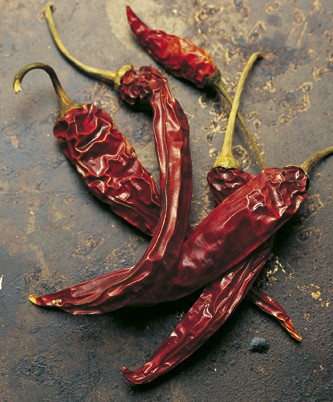
Dried red chilies, Mapusa Market, Goa


The cooking of northern India has its roots in Persia, where the tandoor originated. The tandoor was brought to India by the Mughals, Muslim invaders who ruled most of India for almost 200 years, until the early 1700s. With the arrival of the tandoor began the great phenomenon of “tandoori” cooking, which has spread all over the world and, with the curry, come to broadly represent Indian cuisine.

Under some Mughal rulers, great levels of culinary sophistication were achieved. There were periods during which cooking flourished and its practitioners were nurtured like artists, enjoying a status similar to celebrity chefs today. Vast sums of money were spent on kitchens run by skilled master chefs, or rakabdar, as they were called. Each ruler aspired to outdo the other, in hospitality and in the dishes his chefs devised.

From this, it might seem as if all of North Indian cooking was influenced by Mughal rulers alone, but this could not be further from the truth. Like every cuisine, the cooking of a country or region is shaped by what grows there, the seasons, the climate, and the availability of ingredients, as well as religious and socioeconomic factors.

Rulers in some parts of northern India made great efforts to preserve their own culture and identity. They included the Rajput rulers from Rajasthan, who were avid hunters of deer, wild boar, partridges, and sand grouse, which is why this region has a fine tradition of game curries. In this arid desert climate, little grows, and cooking is earthy and rustic. Dried vegetables, roots, berries, and fruits are more common than fresh ones. Sangri beans, which need little water to grow, are much eaten. Rather than cattle and buffalo, goat and lamb are reared for both milk and meat. Yogurt is used for cooking and as a drink, as it has a cooling effect on the body. Chickpeas, corn, and millet are the staples here, unlike the rest of the country. In such a dry climate this makes sense, because consumption of chickpea flour and cornmeal helps the body retain water.

Punjab, Delhi, and the rest of the north are relatively much better off in terms of fertile land, kinder climate, and better irrigation, as a result of the five rivers that feed the region. This is a land of plenty, and plenty of milk, cream, butter, and other milk products
are used; fresh vegetables, such as spinach, mustard greens, and fenugreek, are abundant;
wheat is grown; and lamb and chicken are reared. Just about the best of everything is available and is used in the cooking in this region.

North India   

The tandoor has had a major impact on the way of life here—even today most households have a tandoori oven tucked away in their courtyard. If not, the village has a communal tandoor, where women will gather at midday or early evening to make their bread or simply exchange news and gossip. The mighty tandoor is so much more than just a means of cooking food—it is an essential part of the fabric of life in this region.

Bengal and the eastern states have very fertile land in the plains, as the Ganges River brings with it the rich soil from the north. The climate is mild, and monsoons mean that two crops can be harvested each year. One of them is rice. Local vegetables are plentiful; mustard grows in abundance, so mustard seeds and oil are used in cooking. With the proximity to the sea, fish is frequently used in Bengali curries.

When the British arrived in India, they made Kolkata—or Calcutta, as it was formerly known—their headquarters. As a result, British influences can be seen in some Bengali dishes (and vice versa). Kedgeree and Bengali vegetable “chops” are just two examples of the crossover of cultures.

Today in northern India, 65 percent of the population is vegetarian, which explains why there is such a wide variety of vegetarian curries in the Indian culinary repertoire. The majority of North Indians are Hindus and Muslims, followed by Sikhs and those of other religions. Because cows are sacred to Hindus and pork is banned in the Muslim faith, beef and pork are rarely eaten.

While history, geography, and religion have all played an important role in shaping North Indian cuisine, there is one other important aspect—without which no cuisine can develop and survive—and that is creativity. And it is creativity that has enabled North Indian curries to travel all around the world, finding new homes wherever Indian migrants have settled. In adapting recipes to what is available locally, new curries have been created, but they are still identifiable as North Indian in their essence.
Frying whole spices > Add them to hot oil so they crackle and toast